Epoxy Garage Floor Slip Resistance When Wet in Riverside
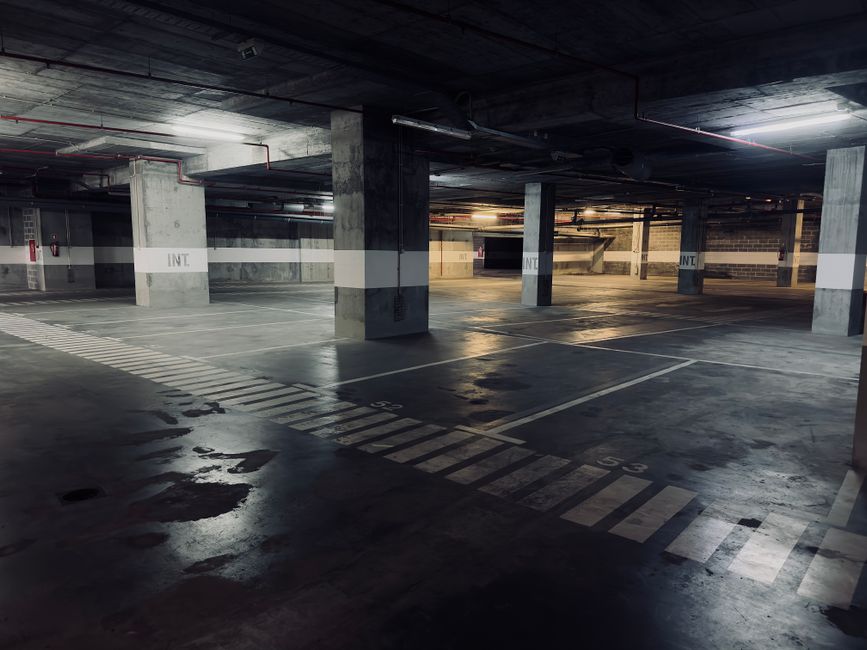
A smooth, glossy epoxy garage floor with no added texture is slippery when wet, and a thin film of water, oil, or antifreeze can make it feel like ice under smooth-soled shoes. The coating is not the real problem. The lack of surface texture is. A garage floor finished with grit in the final clear coat can give solid wet traction, and the choices made around flakes, grit, and sheen decide which kind of floor you end up with.
Why a Plain Gloss Floor Gets Slick
Water on a glossy, hard, nonporous surface has nothing to hold onto your shoe. Bare concrete has a rough, porous face that grips. Once it is sealed under a smooth coating, that roughness is gone.
In Riverside, the wet is rarely just clean water. The first rains after a long dry season bring road oil and grime onto Inland Empire streets, and cars carry that film home on their tires and undercarriage. An oily film on epoxy is far more slippery than clean water. Wet winter cars also drip from the wheel wells in predictable spots, so the slick zones tend to be right beside the driver door and along the path to the house.
Dry floors can be slick too. Santa Ana wind events push fine dust and sand through open garage doors, and a thin layer of loose grit on a smooth coating acts like ball bearings. Sweeping matters here more than in damper climates.
What Decorative Flakes Do and Do Not Do
Vinyl flakes give a floor its speckled look, and they add a little texture where the edges stand above the base. That is where the benefit ends. Once clear topcoat is rolled over the flakes, much of that texture fills in. A full-broadcast flake floor under a thin topcoat has more grip than one buried under thick clear coats, and a heavily filled flake floor can end up nearly as smooth as plain gloss.
So a flake floor is not non-slip by itself. Treat flakes as a color choice, and treat traction as a separate decision made in the last coat.
Where Real Grip Comes From: Aggregate in the Topcoat
Traction comes mainly from an aggregate added to the final clear coat. The common choices:
- Aluminum oxide: very hard and durable, and it holds its texture a long time.
- Fine silica or quartz sand: a familiar, economical-feeling option that gives a consistent fine texture.
- Polymer beads: gentler on bare feet and knees, and easier to mop.
The resin underneath does not decide grip. Polyaspartic is not inherently grippier than epoxy, and epoxy is not inherently slicker. Texture is what counts.
If the topcoat is being chosen for sun resistance, put the grit in that UV-stable top layer. Afternoon sun through an open Riverside garage door can yellow or chalk some epoxies over time, and aliphatic polyurethane or polyaspartic topcoats generally hold up better. The grit belongs in that top layer, not in a base coat where it does nothing once buried.
Grit Has to Be Locked In
Grit sprinkled onto a cured floor, or mixed into a coat that is too thin, wears off quickly. It leaves slick lanes in the tire paths and along the walk to the car door, which are exactly the places people need grip. Properly locked-in grit sits within the final coat so the resin holds each particle.
Even Coverage Matters
Grit is often spread or mixed unevenly, leaving clumps in some places and bare gloss in others. A simple test works well on a finished floor: wet a small area and walk across it in normal shoes. Check near the house door, the step down, and in front of the water heater and laundry area.
Why More Grit Is Not the Answer
A heavy, coarse texture brings its own problems. It grabs dirt and tire marks, chews up mop heads, and is hard on bare skin and knees. Most homeowners do best with a light-to-medium texture that still lets a squeegee or mop glide.
Households with older adults, small children, pets, or a garage used as a workshop or gym should lean toward medium. Pets in particular struggle on smooth gloss, wet or dry.
Sheen Is Not Slip Resistance
Matte and satin topcoats reduce glare and hide scratches, which is useful. They do not make a floor grippy. A satin finish with no aggregate can be just as slick when wet as a gloss one. Judge a floor by its texture, not by how shiny it looks.
Traction Versus Easy Cleaning
The two goals pull against each other, and it helps to choose knowingly.
- Smooth gloss wipes clean in one pass but is slick when wet.
- Textured finishes hold better underfoot but need a stiff deck brush or soft-bristle scrub to lift dirt out of the low spots.
A good compromise is a light texture across the whole floor, with a broader or sharper grit pass in the places that get wet: the driver door, the path to the house door, and the apron near the garage door. Garage slabs often slope toward the door or a drain, and water moving across a slope makes slipping more likely. Any step into the house deserves extra attention too.
Keeping Traction Once the Floor Is Down
Clean Without Leaving a Slick Film
Use a pH-neutral cleaner or one the coating maker approves. Avoid soap-heavy or wax-containing products, because some household cleaners leave a slick residue that reduces traction even on textured floors. Rinse well after any detergent.
Inland Riverside water tends to be hard. If hose water air dries on a gloss floor, it leaves white mineral spots and a film that can dull the finish. Squeegee standing water out after washing instead of letting it evaporate.
After the first storms of the season, wash the floor down to remove the oily road film that cars tow in.
Deal With Drips Promptly
Oil, transmission fluid, and coolant should be wiped up quickly, and not only because of stains. A slow drip under a parked car makes a slick puddle exactly where someone steps out. Drip mats under older vehicles help.
Be Careful With Mats
Rubber-backed mats can trap moisture and may discolor some finishes, and they slide on wet gloss. Use mats made for coated floors, or rely on built-in texture at the doorways.
Texture Wears, So Test It
Grit wears down over the years, mostly in tire paths and walk paths. Anti-slip texture does not last the life of the floor without attention. Every year or two, wet-test those areas. When the texture feels smooth, a scuff sand and a fresh gritted topcoat can restore traction without redoing the full system.
Adding Grit to an Existing Floor
Grit cannot simply be sprinkled onto any old coating. The floor needs proper prep: degreasing, scuff sanding to dull the gloss, and cleaning off all the dust. A new coat rolled over a waxed, oily, or glossy surface can peel and leave slick patches.
A Riverside Slab Issue That Creates Trip Hazards
Many older Riverside homes, including mid-century ranch and tract houses, have garage slabs poured without a vapor barrier underneath. Moisture rising through the slab can cause blistering or peeling. Lifted edges and blisters create trip points and expose bare concrete. A moisture test before coating is worth doing, because the best grit in the world will not help on a floor that is lifting.
What to Ask Before Choosing a Finish
- Is the grit going into the final, UV-stable topcoat?
- What texture level is planned, and is it light-to-medium for how the garage is used?
- Will the driver door, house door, and sloped areas get extra attention?
- Is the grit mixed or locked in so it will stay in the tire paths?
- Can a sample area be wet-tested in normal shoes before the whole floor is done?
No texture level is guaranteed safe on paper. Any slip rating or test number only means something for a floor that has actually been tested after installation. A wet walk-through in your own shoes is the most honest check you can run.